
I heard a statistic the other day that we are currently living in the most media-insulated time in history since the Civil War. Just 20 years ago, we all received information from only a few news sources. Today, depending on who we choose to read or listen to, that shapes our algorithms, our perspective on current events varies widely depending on which narrative we choose to embrace.
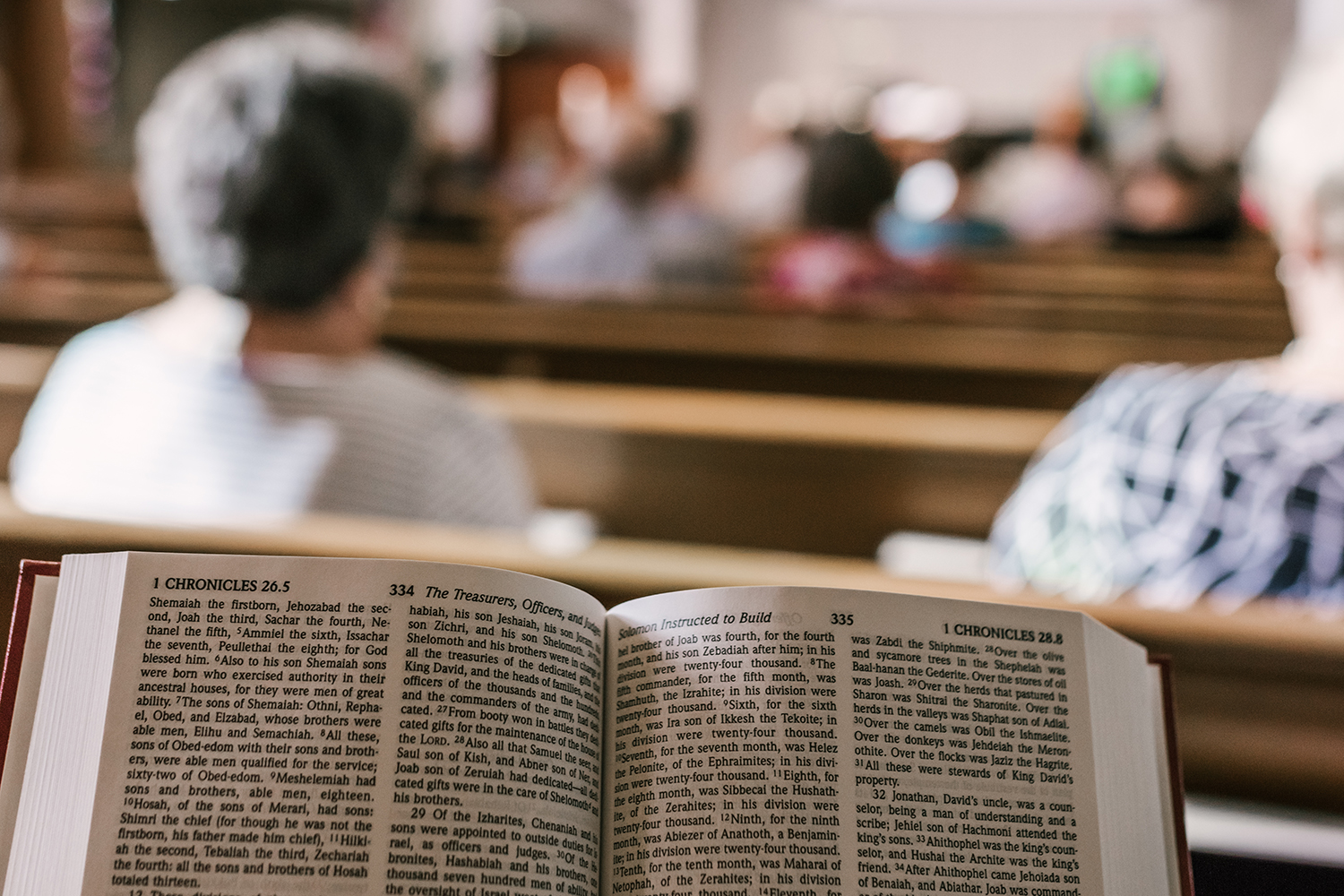
I hope we can be united by the narrative scripture offers us. I’d like to focus most of our attention on Micah 6:1-8
Hear what the Lord is saying:
Arise, lay out the lawsuit before the mountains;
let the hills hear your voice!
2 Hear, mountains, the lawsuit of the Lord!
Hear, eternal foundations of the earth!
The Lord has a lawsuit against his people;
with Israel he will argue.
3 “My people, what did I ever do to you?
How have I wearied you? Answer me!
4 I brought you up out of the land of Egypt;
I redeemed you from the house of slavery.
I sent Moses, Aaron, and Miriam before you.
5 My people, remember what Moab’s King Balak had planned,
and how Balaam, Beor’s son, answered him!
Remember everything[a] from Shittim to Gilgal,
that you might learn to recognize the righteous acts of the Lord!”
6 With what should I approach the Lord
and bow down before God on high?
Should I come before him with entirely burned offerings,
with year-old calves?
7 Will the Lord be pleased with thousands of rams,
with many torrents of oil?
Should I give my oldest child for my crime;
the fruit of my body for the sin of my spirit?
8 He has told you, human one, what is good and
what the Lord requires from you:
to do justice, embrace faithful love, and walk humbly with your God.
We tend to focus on the last few verses, 6-8. We hear it as God telling us to keep doing what we’re doing, Keep acting justly, loving mercy, and walking humbly with God. The verses prior to that passage are less well-known. The prophet Micah, like all of the other prophets, was not well-liked. He said what people didn’t want to hear, but words that God wanted them to hear. At the time, Israel had fallen out of step with who God wanted them to be. The leaders of Israel at the time were driven by wealth and greed – the rich had only gotten richer and the poor only poorer. Even those who labeled themselves as prophets would only give God’s blessing if paid handsomely to do so. In this chapter, Micah is imagining a trial where Israel must hear God’s charges against them.
In this imaginative trial between God and Israel, where it appears all of nature is the jury, God implores Israel to explain what it is they have against God? What has God done to make you tired of God? God then reminds them: “I’m the one who brought you out of Egypt, who brought you leaders like Moses and Aaron.”
“Who protected you when other nations waged war against you?
“What has happened to you that you are so full of greed that you’ve turned on your own people? You’ve turned your back on the poor, needy, and vulnerable.” And in doing so they’ve turned their backs on God.
Israel is convicted by God’s pleas and is repentant. They are sorry. They are admitting and owning their wrongdoing. They are admitting that they turned away from God. We know they are sincere because they want to change. We know this because they ask God how they can make it right. This is when God answers them by saying, “So they ask, what can we do to make it right, God? Show us!”
Micah’s reply: God has already shown you what is good. To do justice, to love mercy, and to walk humbly with your God.
God’s people are in the predicament they are in now, because they failed to do just that.
According to Biblical scholar, Elizabeth Achtemeier, Justice in this passage means a way of living according to God’s will, not according to human advantage, comfort, or desire.
Achtemeier also expands on the Hebrew word in verse 8 that is translated to kindness, or mercy. The original Hebrew word is: “Hesed,” which Dr Achtemeier explains: “is ‘covenant love’ being bound in solidarity with both God and human beings, so that community is established between poor and rich, weak and strong, female and male, slave and free, alien and Israelite.” Achtemeier goes on to say that “Hesed binds people together as one…so that God is not worshipped or obeyed apart from concern for one’s fellow human being.”
It’s not right for us to claim we worship God without care for any other human being. No matter who they are. No matter how they came to this country.
Throughout Scripture, we see that God is always on the side of the poor, the suffering, with those who are persecuted by those in power.
In the Beatitudes, Jesus isn’t listing characteristics that one must become in order to be blessed. What he is saying is that if you are poor in spirit, if you are mourning, if you are yearning for truth and justice (another way to interpret righteousness), you are blessed. God sees you. God is with you. Here, Jesus is speaking to fellow Israelites who are yearning for justice and the ability to live full lives without fearing retribution for simply wanting to provide for their families. Just as in Micah’s time, the Israelites are living under another oppressive regime driven by greed and wealth.
But while the Roman Empire sees them as less than, God sees them fully. God sees them as God’s very own, even when the powers that be see them as expendable.
If you are troubled by the state of our nation, God sees you.
If you are troubled by how immigrants are treated, God sees you.
If you have a pit in your stomach because of what has happened in Minneapolis. God sees you.
For those who are too scared to leave their homes for fear of being detained or deported, even though they are here legally and committed no crime. God sees them too.
I would like to be clear about something. I do not think all individuals in law enforcement are evil. I do agree that there needs to be immigration reform. I do believe that what is happening in Minneapolis is evil and not reflective of God’s justice. It is the opposite of hesed.
If you disagree with me, I invite you to take a deeper dive into Scripture. Micah is only 7 chapters long. I’m also always happy to talk about what God says to us in Scripture.
Throughout history, nations have used God’s name to justify terrible actions and claimed that God was on their side. But do we ever ask ourselves if we are on God’s side? Again, God sides with the poor, the outcast, and the oppressed. Are we therefore standing with those who are the poor, the outcast, and the oppressed today?
Recently, I realized I need to keep my passport in my purse at all times. I was born here in the U.S., but because it’s been said on record that the color of one’s skin is grounds to question one’s status in this country, I need to be ready. I don’t want to live like this, and I don’t think you want me or my children, for whom I’m also afraid, to live like this either. One afternoon, I realized I left my phone at the church while I went to several meetings downtown. A few hours later, I finally got my phone on my way home with several texts, many from my husband, Matt. I’m known for misplacing my phone, my keys, my waterbottle etc, so I’m a little annoyed with his texts. So I walk in the door, and Matt says to me, “You could’ve texted me right when you got your phone.” I replied: “I just wanted to get home, it’s late, and besides, I messaged you from my laptop to tell you I left my phone in my office.” Matt replies: “I didn’t know if you had been picked up by ICE. I needed to know you were safe.” I felt terrible for not realizing how scared he was. This is our life right now. And I’m a citizen. I can only imagine what those with green cards or asylum status feel right now.
I also carry in my purse this rock: It says “hope.” In a recent spiritual direction group that I’m a part of, we were asked to pick a rock and write on it a word that we feel God has put on our heart. The word that came to mind was “hope.” In Christ, we have hope. We have hope even when all seems hopeless. God sees us and is with us. God sees and is with those who are suffering. We have hope that God’s love, mercy, and justice will always prevail. We are called to join in how Jesus is already doing just that in our homes, our schools, our city, and right here in this church. This looks different for everyone, but whatever it is you feel called to do, remember to do justly, love mercy, and walk humbly with our God.